
The journal
What is the best way to dice up an onion?
A clear, step-by-step method for evenly dicing an onion and avoiding common slip-ups.
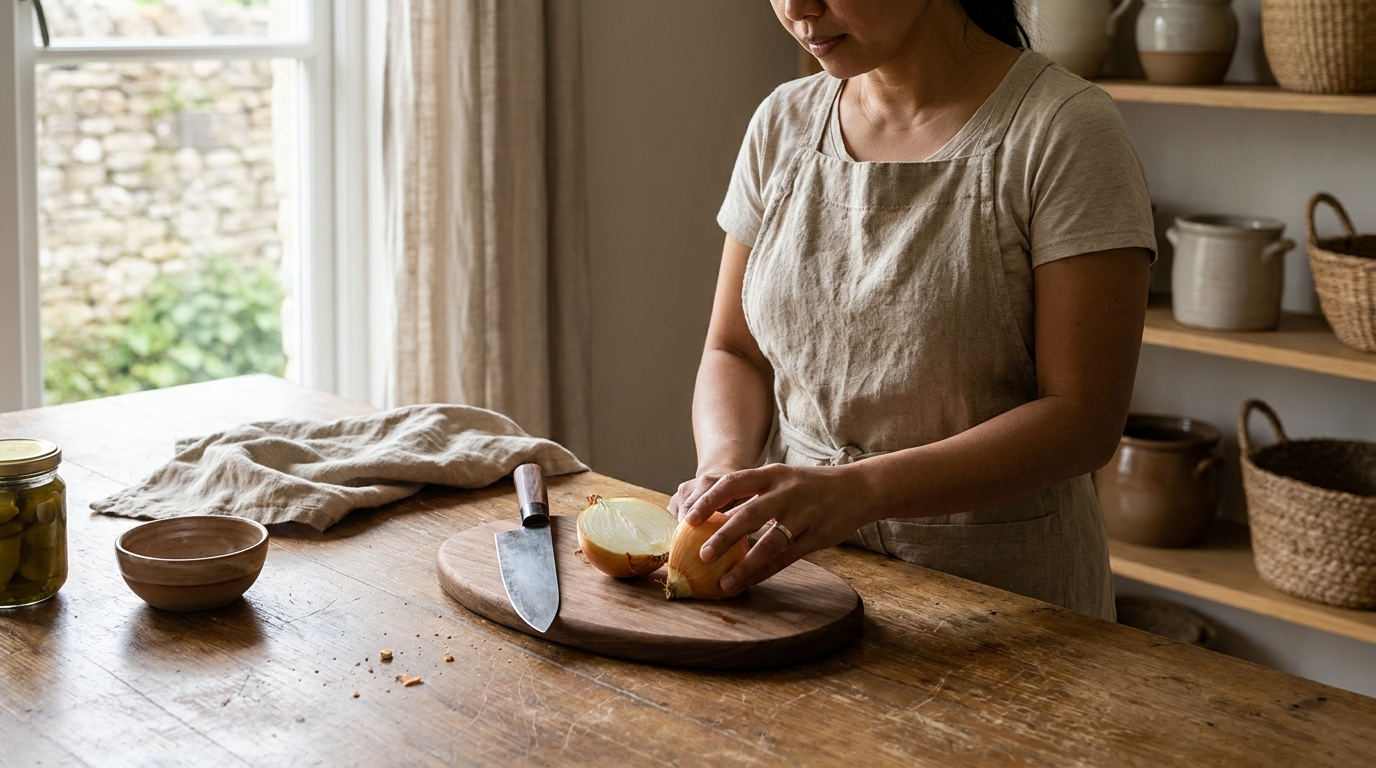
One useful way to dice an onion evenly is the classic grid: cut the onion in half through the root and leave the root attached, make two or three horizontal cuts toward (but not through) the root, add vertical cuts, then turn the onion and slice down to release neat cubes. Keeping the root attached helps hold the layers together, while a flat cut face stabilises the onion (Good Food: How to cut an onion).
Set up a stable cutting position
Use a stable board and a sharp, controlled knife. Put the onion’s flat cut face on the board and keep curled fingers away from the blade’s path. Do not attempt a horizontal cut toward your supporting hand. If that movement feels insecure, omit it and use evenly spaced vertical cuts and the onion’s natural layers, accepting a less exact cube.
Step-by-step: an even, classic onion dice
- Trim the stem end. Halve the onion through the root, then peel, leaving the root intact to bind the layers (Good Food: How to cut an onion).
- Lay one half cut-side down with the root away from you. Make two or three horizontal cuts toward the root, stopping short so the root still holds the layers together (Good Food: How to cut an onion).
- Cut straight down vertically from top to board, again stopping before the root so everything stays aligned (Good Food: How to cut an onion).
- Cut across the previous vertical cuts, starting at the stem end and working gradually toward the attached root to create evenly diced pieces (Good Food: How to cut an onion).
- Repeat with the second half, then discard the root end.
How to keep the dice even
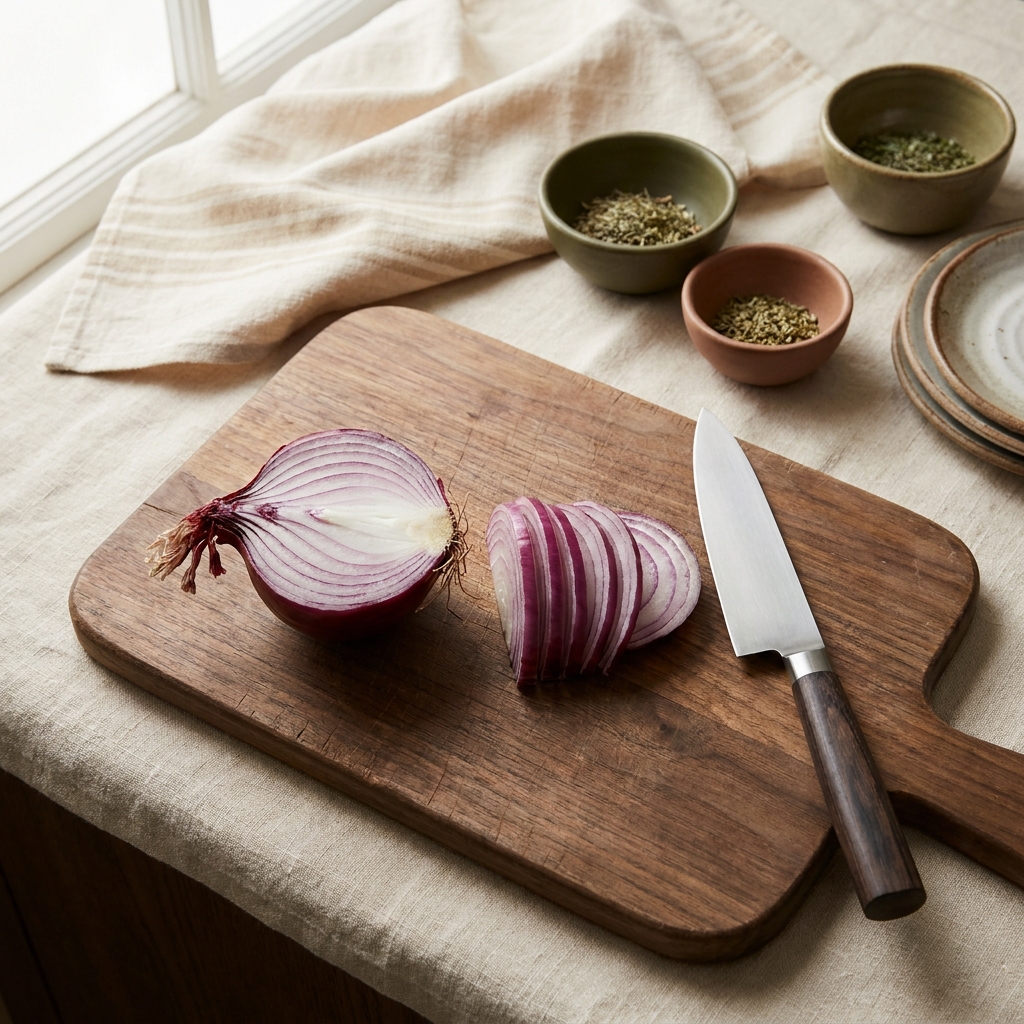
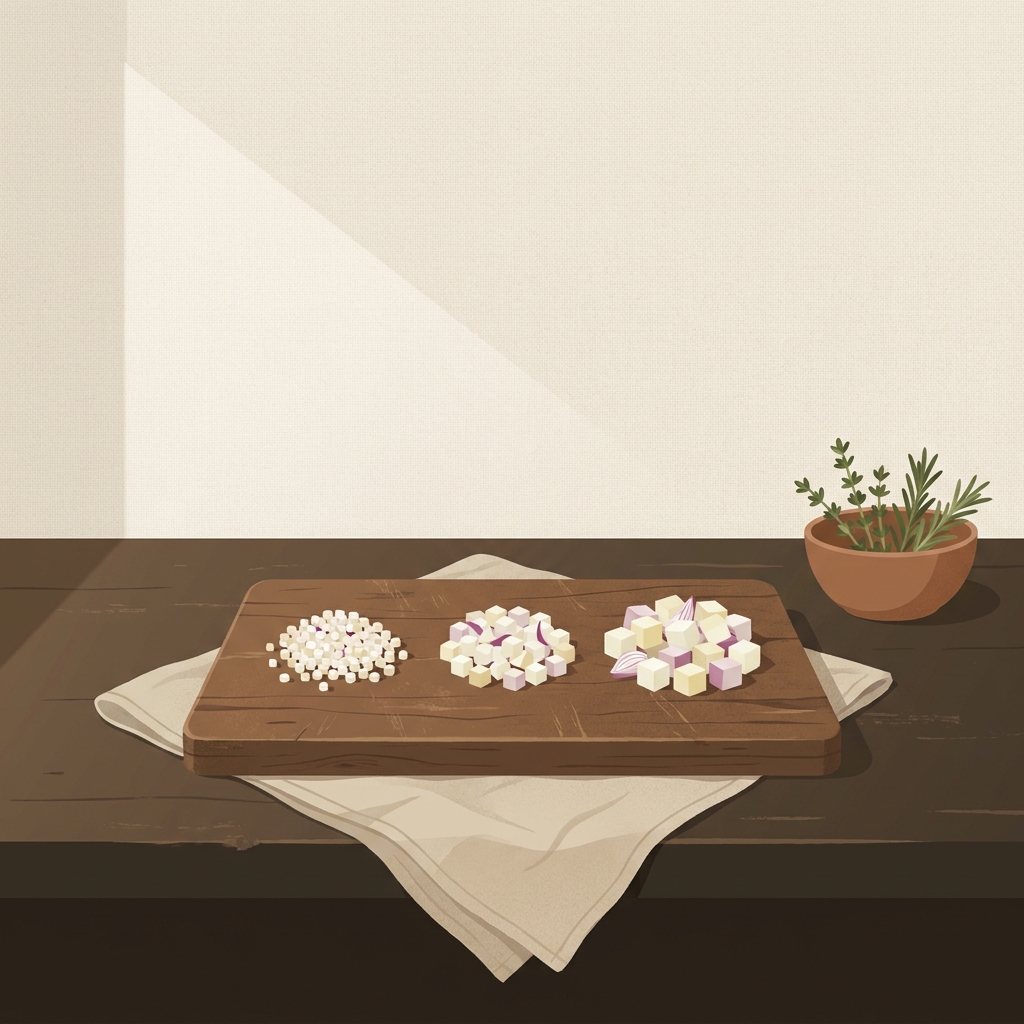
Dicing means cutting into squares or cubes. The more regular the shape and size, the less likely the pieces are to catch and burn at the edges, and the more evenly they’ll cook (Good Food: How to cut an onion). Keep your horizontal and vertical cuts evenly spaced; closer spacing yields a finer dice, wider spacing yields a coarser one.
Worked example: quick sauté base
For a sauté base where you want pieces to soften at the same rate, make evenly spaced horizontal cuts first, then add matching vertical cuts. Finish with smooth downward slices to release uniform cubes you can sweep straight into the pan (Good Food: How to cut an onion).
Avoid these common slip-ups
- Cutting off the root too soon: leave it intact so the layers don’t slip as you finish the grid (Good Food: How to cut an onion).
- Uneven spacing: set your first few cuts as the “ruler” and keep that spacing across the onion for consistent cubes.
- Rushing the final slices: work across the earlier cuts toward the root in controlled slices, keeping fingers out of the cutting path (Good Food: How to cut an onion).
Related help from Stirred Daily
- Sharpen or hone first? The simple rule for home cooks
- Should you wash a wooden cutting board with soap?
Even onion dice: quick setup and sequence
FAQ
Do I remove the root before dicing?
No. Leave the root intact until after the final slices. It holds the onion together and helps you make neat cubes (Good Food: How to cut an onion).
Why does even dicing matter?
Uniform pieces are less likely to catch and burn at the edges and are more likely to cook evenly (Good Food: How to cut an onion).

Related guides
Optional equipment for this guide
If transferring chopped ingredients is awkward, a bench scraper can help keep the knife for cutting.
As an Amazon Associate I earn from qualifying purchases. These are researched options, not hands-on test results. Check the exact size or model, current price and availability on Amazon.
| Product option | Fit and limits to check | Retailer |
|---|---|---|
| Product imageOXO Good Grips bench scraper | Use the bench scraper to move chopped onion from the board rather than dragging a knife edge sideways. It does not replace a sharp suitable knife or a stable chopping board. | View on Amazon |